What Is a CMR Document? Complete Guide for Transport in Europe
In this complete guide, you will learn what a CMR document is, when it is required, how it works in practice, and how to fill it in correctly. We also explain the difference between paper and digital CMR (e-CMR), legal requirements, and common mistakes to avoid.
What Is a CMR Document?
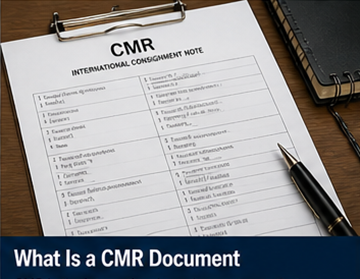
A CMR document is an official transport document used in international road freight. It serves as proof of a contract between the sender, the carrier, and the receiver of goods. The term “CMR” comes from the French Convention on the Contract for the International Carriage of Goods by Road.
The CMR document contains all key information about a shipment, including sender details, delivery address, type of goods, weight, and transport conditions. It is used across Europe and many other countries that follow the CMR Convention.
- Confirms that a transport contract exists
- Describes the goods being transported
- Provides instructions for the carrier
- Acts as proof of delivery when signed
- Helps resolve disputes or claims
When and by Whom Was the CMR Introduced?

The CMR document was introduced in 1956 under the Convention on the Contract for the International Carriage of Goods by Road. This international agreement was established to create a unified legal framework for road transport across different countries.
The convention was signed in Geneva under the authority of the . Its main goal was to standardize transport rules, reduce legal uncertainty, and simplify international trade between European countries.
- Introduced in 1956 in Geneva
- Created under the United Nations framework (UNECE)
- Applies to international road transport of goods
- Adopted by most European and several non-European countries
- Still in use today as a key legal transport document
Since its introduction, the CMR Convention has been adopted by more than 50 countries, making it one of the most important legal foundations of international road transport. Today, it continues to evolve with the introduction of digital solutions such as e-CMR.
When Is a CMR Document Required?
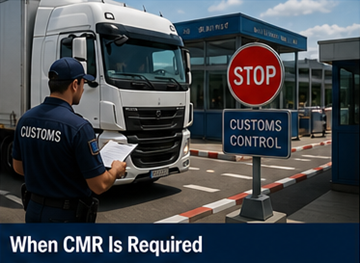
A CMR document is required when goods are transported by road between two different countries, and at least one of those countries is part of the CMR Convention. It is most commonly used for international transport across Europe.
Even though it is mainly required for international shipments, many companies also use CMR documents for domestic transport to standardize their logistics processes.
- International road transport (mandatory)
- Cross-border deliveries within Europe
- Optional use for domestic transport
- Recommended for high-value shipments
What Information Does a CMR Contain?
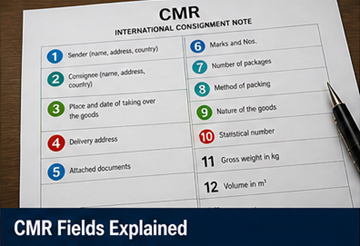
A CMR document includes detailed information about the shipment and all parties involved. Filling it in correctly is crucial to avoid delays, legal issues, or disputes.
- Sender (consignor) name and address
- Receiver (consignee) details
- Carrier company information
- Place and date of loading
- Place of delivery
- Description of goods
- Weight and number of packages
- Special instructions (fragile, temperature, etc.)
- Signatures of sender, carrier, and receiver
How to Fill in a CMR Document (Step by Step)

Filling in a CMR document correctly is essential for a successful transport. Mistakes can lead to delays, fines, or disputes between parties.
- Enter sender (company or person shipping the goods)
- Add receiver (delivery address and contact details)
- Fill in carrier information (transport company)
- Specify pickup location and delivery destination
- Describe the goods (type, packaging, quantity)
- Add weight and dimensions
- Include special handling instructions if needed
- Sign the document before loading
- Collect receiver signature upon delivery
Who Signs the CMR Document?

The CMR document must be signed by all parties involved in the transport process. These signatures confirm that the goods were handed over and delivered under agreed conditions.
- Sender signs at pickup
- Carrier/driver signs during transport
- Receiver signs at delivery
- Signed CMR becomes proof of delivery (POD)
CMR vs e-CMR (Digital CMR)
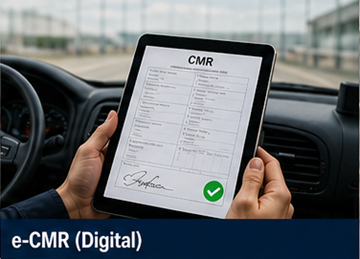
Traditional CMR documents are paper-based, but many logistics companies are now switching to digital CMR (e-CMR). This modern solution allows documents to be created, signed, and stored electronically.
- Paper CMR: physical document, manual signatures
- e-CMR: digital document, electronic signatures
- Faster processing and less paperwork
- Real-time tracking and updates
- Reduced risk of document loss
Digital CMR solutions are becoming increasingly popular in Europe and are legally accepted in many countries. Platforms like ExusTrans can integrate digital documents with tracking, chat, and order management.
Common Mistakes to Avoid
Incorrect or incomplete CMR documents can cause serious problems during transport. Always double-check the information before starting the delivery.
- Missing or incorrect addresses
- Wrong description of goods
- Missing signatures
- Incorrect weight or quantity
- No special instructions for sensitive cargo
Why Is the CMR Document Important?

The CMR document plays a crucial role in transport operations. It protects all parties involved and ensures that shipments are handled correctly and transparently.
- Legal protection for sender and carrier
- Proof of shipment and delivery
- Helps resolve disputes and claims
- Supports insurance and liability processes
- Ensures transparency in logistics
FAQ: CMR Document Explained
Is a CMR document mandatory?
Yes, it is mandatory for international road transport between countries that are part of the CMR Convention.
Can I use a CMR for domestic transport?
Yes, many companies use it for domestic transport even if it is not legally required.
What happens if a CMR is missing?
Transport may be delayed, and legal or insurance issues can arise. It is strongly recommended to always use a CMR.
Is e-CMR legally valid?
Yes, in many European countries e-CMR is legally accepted, but adoption may vary depending on local regulations.
How many copies of a CMR are needed?
Typically, three original copies are created: one for the sender, one for the carrier, and one for the receiver.
eXus Dev